
An audiovisual performance by Gabriela Bila and Holger Prang
Environments in Translation is a live audiovisual performance exploring the relationships
between landscapes, images, sound, and computational imagination. Bringing together field
research, generative media, and live electronic music, Gabriela Bila and Holger Prang
investigate how places can be observed, interpreted, and transformed through different
technological and sensory languages.
The performance unfolds in two acts:
Act 1: A Bio-cultural garden
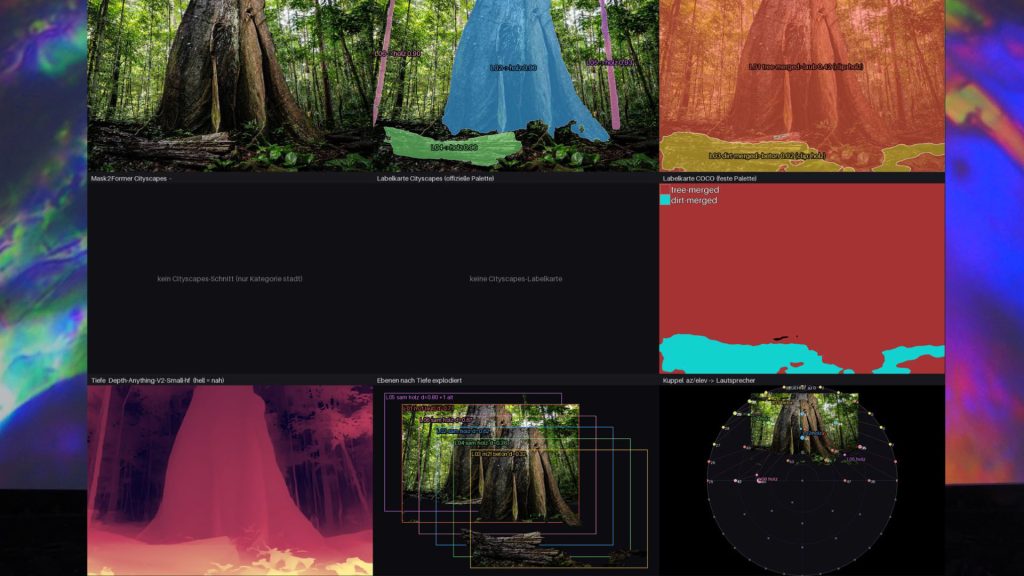
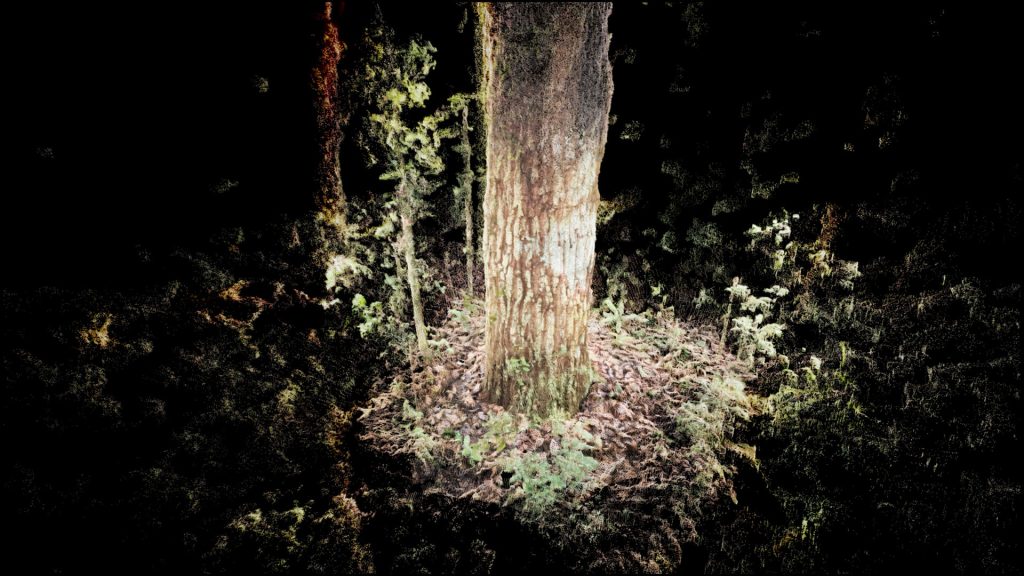
The first act draws from Imaginary Atlas, Amazônia, an ongoing research project led by Bila that
explores futures for Amazonian cities by expanding the very notion of what constitutes a city.
Through an audiovisual journey, documentation collected over years of field research — from
archaeological artifacts and deep forests to riverside communities and dense urban
environments — is transformed into digital landscapes, revealing the Amazon as a living
territory shaped by complex ecologies in which nature and culture intertwine.
Accompanied by Holger Prang’s live sound performance, the act moves between
documentation, abstraction, and imagination.
Act 2: Off Frame
The second act moves from the forest to the street, and from the place itself to the act of
perceiving it. Led by Prang, it is built around Foley for Places, an instrument that composes the
sound of a place from a single image. Named after the film craft of Foley, where sound is
performed to serve a scene rather than recorded from it, the instrument listens to what a camera
sees and invents what it cannot: the traffic behind the photographer, a tram one street over,
bells ringing across the district.
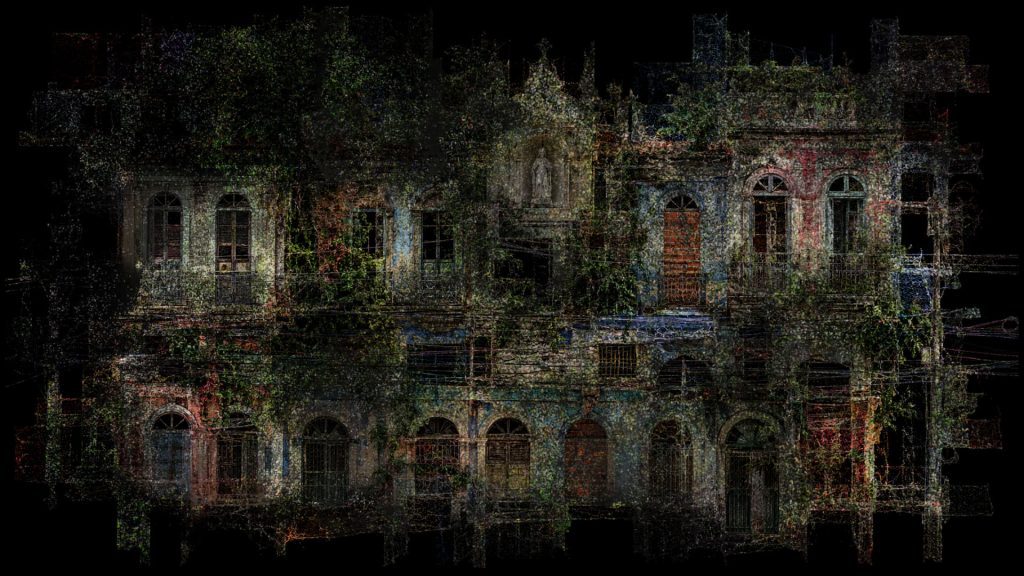
Street-level images from cities around the world are read by machine vision and translated into
sound. A single score then carries them back into image. Prang performs these translations live,
steering the machine’s guesses as they pass between seeing and hearing. Familiar streets
gradually lose their outlines until only patterns, textures and rhythms remain